Tuesday, June 19, 2012
Not Advice.. Previews to #ISTE12
So just after I posted this screencast, I realized that I forgot an important Sunday evening event, which you can read all about here! Don't miss it! https://edubros2012.eventbrite.com/?nomo=1


Saturday, June 2, 2012
Our Fantastic Toontastic Session with Andy Russell!

On Wednesday, we had the wonderful opportunity to meet and learn from Andy Russell, one of the co-founders of Toontastic. Not only did Andy want to meet and talk with our students about their experiences using Toontastic, but he also wanted to impart a very important message to 4th graders: It's never too early to develop your ideas and turn them into something special. Andy emphasized that you don't have to wait until you go to college to develop and refine your big ideas. He shared that 70% of the process of developing an app or any piece of software can be mapped out using paper prototyping. Andy even showed us the early paper prototypes of Toontastic and how he used them to test his ideas with users.
 | ||||||||||||
| The first Toontastic stage |
 | |||||
| So cool to see the first paper prototypes of Toontastic! |
 | ||||||||
| Now to add the screen frame to test how it all fits. |
 |
| Taking our ideas for our chicken-wolf game! |
 | ||||||
| Using Keynote to make our first game mock-up |
After the talk, Andy, and his partner, researcher and cognitive psychologist Alicia Chang, observed the students using the app. It will be interesting for them to study how our kids' Toontastic storytelling changed over the course of 3 test sessions.
Yesterday, we wrote thank you emails to Andy and Alicia, and from those emails, I can tell that our kids had a wonderful, inspiring experience!
Friday, April 20, 2012
Celebrating Earth Day with Dance and Song
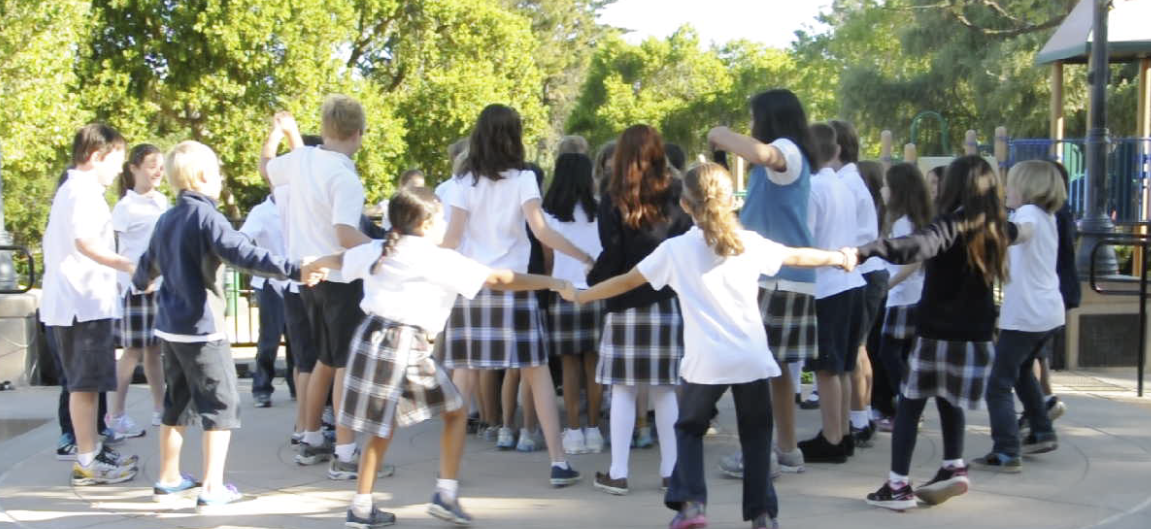
After my wonderful 2nd grade colleague, Crystal, and I wrote a song for Earth Day on Garageband, we challenged our students ( 2nd and 4th grade reading buddies) to create their own dance moves to represent Air, Fire, Water and the Earth. If we had had more time to prepare, we would have had them compose the song but we only had 4 days to prepare! The students came up with an incredible plan and Crystal worked the magic for it to all come together.
Here is the song:
 Although I cannot show you photos with their faces here, I can show a couple shots and let you hear the music.


Here is the song:



Friday, April 6, 2012
Break the Rules!
Inspired by wonderful educators and thinkers I've met on Twitter, Pam Moran, Ira Socol and their work with schools here, I went out on a limb and broke the rules last week! I was further inspired by the work of Michael Thornton shown here. After privately testing to be sure that the dry erase markers wouldn't stain the desks, I carefully planned my surprise.
As I talked with students at the beginning of the day about our plans, I casually walked up and began to write on a student's desk, sharing that I had been invited to discover a new way to illustrate our learning. Gasps and giggles erupted as I showed how I could erase my work easily. "When can WE do that?" was of course, the next question. And, by the way, this question has been asked nearly every day since.
During math, our lesson ( as described by our curriculum) required students to practice drawing lines of different lengths. This was the perfect activity to practice measurement, both drawing these lines, reporting their lengths in different units, and then later measuring and calculating the perimeter and area of their desks.
Enjoy a few pictures, with faces omitted due to school policies.
 |
| There is something really fun about "breaking the rules!" |
 |
| Students all brought in old socks the next day in anticipation of needing more erasers :-) |
 |
| 100% of the students are engaged when we write on desks! |
 |
| I'll take that heart as a symbol she is having fun! |
 |
| Students who often draw other pictures instead of answering problems on white boards did not get off task. |
 |
| By the way, the marker wipes right off and if there is residue, dry erase cleaner or disinfectant wipes get the surface clean! |

Friday, March 23, 2012
Recognize
This morning, instead of writing, I recorded a very brief AudioBoo entitled: Recognize.
listen to ‘Recognize’ on Audioboo
Today I invite you to recognize your hard work, your dedication, your passion and to recognize those traits in those around you.
Today I invite you to recognize your hard work, your dedication, your passion and to recognize those traits in those around you.
Wednesday, February 22, 2012
5 Myths We Must Combat to Foster Kindness in Kids..
In preparation for today's New Teacher Chat on, "Teaching Kindness," I have been thinking a lot about how we, as educators, can influence the development of compassion in our students.
As I walked for miles today through a beautiful quiet forest, I thought about some of the places I have worked where students often did not have their basic needs fully met. I tried to remember if I had the same issues with kids being mean to each other as I hear about and have experienced in many schools. Ironically, I don't believe that students were less willing or able to practice kindness in the most impoverished schools. Actually, in my experience, the less economically advantaged students were often more able to share and offer empathy, when given the tools and opportunity to do so.
As I pondered deeper, I reflected on some of the beliefs that get in the way of expressing kindness. Some of these ideas I've heard from teachers, and some by students. If we are to combat a "me, me, me" mentality, we must figure out what we can do to remove the barriers to kindness in school. Many of the barriers stem from faulty thinking, and in order to actually promote kindness, we must challenge these myths:
- Myth #1: Being kind makes you weak. Many of us fall into the habit of thinking that being giving and accommodating means that we are doormats. This is not the case at all! Giving of ourselves, within our means, helps us stay healthier and happier. We can model this for our students and support them when they reach out to give to someone. Sharing stories of our own strength through giving also provides a positive model for our kids.
- Myth #2: There isn't enough to go around, so if I give up something, there will be nothing left for me. We often latch onto things or opportunities because we are fearful that resources are limited. While sometimes this is the case, often it is just a reaction that we have learned. As a middle kid in a big family, I am often guilty of thinking that I must quickly get what I need in case it disappears. We can reassure our students that there is plenty of our attention to go around.
- Myth #3: I am too busy. Acts of kindness do not have to be planned out for months, nor do they necessarily require a great deal of time. I have given students "homework" where they have to do an act of kindness once per day for a week and then record it. At the end of the week we talk about our experiences and how we felt afterward. Kids are quite impressed by how quick and easy it is to take a moment to extend a helping hand.
- Myth #4: Being nice to that person means that I will become unpopular. For this one, I say: so be it! Take the risk! If others shun me because I reach out to someone else, then who has the problem? Not me! In class, we talk about the risk of being an "upstander" when someone is being bullied or harassed. We also roleplay situations to give students the tools and words to stand up for what is right.
- Myth 5: Being available and giving means that I need to be a martyr. You can't truly help others unless you take care of yourself first. Practice those acts of kindness on yourself, by giving yourself an extra 5 minutes of quiet time, or a teeny bit of extra whipped cream on that dessert. Teach your students that they can be kind to themselves AND others.
Sunday, January 8, 2012
Starting the New Year WIth a New Sentence

With my wonderful PLN on Twitter, I was talking about ways to start the New Year other than the traditional New Year's resolutions. Thanks to a conversation with my friend, Ally, @FlyontheCWall, I decided to be brave and begin a new exercise in 4th grade the first day back from our winter vacation and completed it the following day. As it’s a new year, it’s always a great time to re-examine goals and ideas about who we want to be.
I began by challenging 4th graders to think and brainstorm about who they want to be in 2012. I asked questions like:” What is something you want to be able to say about yourself?” “What is a quality or an action you want to be known for?”
We watched this brief video, based on Daniel Pink’s, “What’s Your Sentence?”
What's Your Sentence?: The Video from Daniel Pink on Vimeo.
The next day, students took their brainstorms from the first day and wrote “their sentences”. Below are some photos of the results. Pretty impressive, especially for 4th graders! Such a positive way to begin 2012!


As you start 2012 with your students, how will you inspire them to make choices that lead them to who they want to be?


Subscribe to:
Posts (Atom)